22nd Sunday Ordinary Time (Cycle C)
The tie in between today’s readings: Saving grace or saving face?
Psalm 68:3-10, Sirach 3:17-29, Hebrews 12:18-24, Luke 14:7-14
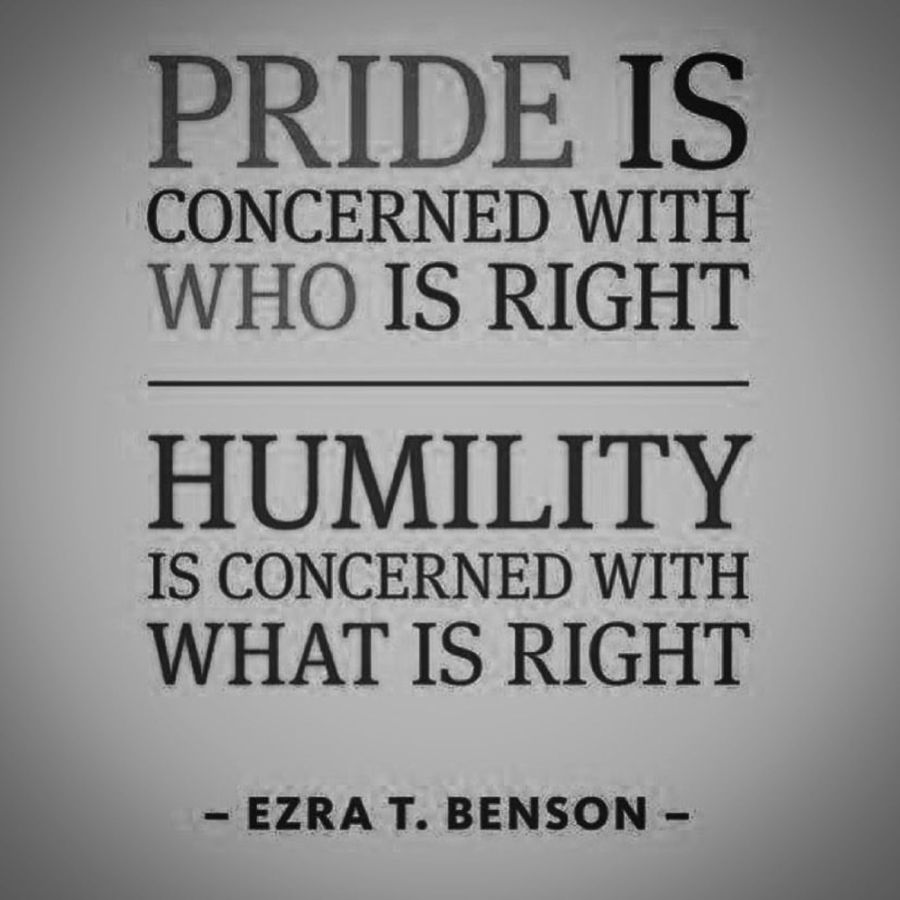
Today’s Mass Prep compares pride and humility. Let me start off by saying that pride isn’t a bad thing if it’s kept within the confines of yourself. There is nothing wrong with taking pride in that fine birdhouse in your garden that you built from scratch and scrap wood. Pride is a conscious self-evaluation that will help spur you on to excel in other life challenges and that’s a good thing. The bad pride is when you look down on another person because your birdhouse is better than theirs, or so you think. Of course if, their birdhouse proves to be the superior one, then you get the bad kind of jealousy…but I digress. Humility, by contrast, looks totally outwards. It sees an opportunity to help others and meets it for no other reason than it needed to be done. It’s never deterred over cost or inconvenience, nor does it look for thanks in the end, although that’s always nice. Pride and humility are both unconscious qualities; long seen in us by others before we recognize then in ourselves, if ever. So, we must all make a conscience effort to develop humility in our lives since it draws us closer to God. By the same token, we need to be on guard against pride, because, as the Bible says, it always precedes a fall.
The key to Jesus’ banquet advice in our reading today in Luke 14: 7-14 is found in a parallel parable in Luke 18:9-14, The Pharisee and the Tax Collector. Their identical conclusions: Those that exalt themselves will be humbled and those that humble themselves will be exalted. While the story of the banquet ends up with the proud person getting his feelings hurt, the other story is more dramatic in that the Pharisee’s “prayer” never even got past heaven’s door. Both of these stories feature clueless, proud individuals acting on their assumptions of self sufficiency, self importance, and self exaltation. God has a problem with that.
In the Our Father, Jesus prays, “Thy will be done.” There was a time when God’s will was the only will and then Lucifer, in his pride, challenged that scenario in his rebellion. This started the “Whose will be done?” war, which spread to the earth with the Fall of Adam and Eve. It continues to this day. We are soldiers in this war on one side or the other. God wants us to recognize His perfect will and obey Him, trusting that Father knows best for your life. That’s what the humble person will do. The theme in our Psalm 68 reading is that there are blessings in following God’s lead.
The proud, on the other hand, go their own way with a deep down belief that their lives would be better if they disobey the Lord. So, after you ignore the best the Almighty has for you, what does the, “It’s my life and I’ll do what I want.” approach to living get you?
Luke 14
disgrace, loss of reward at the resurrection.
Sirach 3
futile strivings, conceits, imaginations that lead astray, meddling, foolish actions
a stubborn heart, no repentance, multiplication of sins, many hurts, a bad ending
dangerous chances, incurable afflictions.
Psalm 68:6
life in a “wilderness”
From our human perspective, these blessings and curses don’t always follow through as we would like. Many of the rebelliously proud do quite well, while, it is all too common that the humble followers of Christ suffer. Remember, first off, these are tendencies, truisms, and proverbs that point to a common ending. It may take time, even generations, for the chickens to come home to roost. More importantly, it’s God’s job description to judge lives. For the proud, that will be really scary. We need to just look after our own conduct and remain faithful.
In our reading in Hebrews12:18-24, there are two mountains. One is Mount Sinai. This is the mountain of God’s Law where each proud person will stand at court in the Final Judgement and explain to the Almighty how they measure up and are worthy to enter His heaven. They will argue that they went to church, prayed, and did the best that they could. They will tell the Lord, from their point of view, how they kept the Ten Commandments, helped their neighbors, and were good spouses and parents. They will bring out their own scales of justice and proclaim that 51% good is enough to squeeze through the Pearly Gates, after all, nobody’s perfect. They will proclaim their righteousness by comparing themselves to Hitler, Stalin and that guy down the street who abandoned his family. The embezzler will be proud that he was never a murderer. The murderer will boast that he was never a child molester. The child molester will compare himself to the terrorist. The terrorist will argue the validity of his cause. Around and around it will go each applying standards against each other in their vainly constructed philosophies to justify the virtues of their own lives. Everyone will fail because the standard of comparison is not between people, but against God’s perfect moral Law and no one measures up against that.
Then, after they are finished, the Father will ask what they thought about Jesus, His Son. Some will say that He set a good example. The Lord will say, “He served others. Why didn’t you follow Him?” Some will say that He was a good teacher. Then the Almighty will ask, “He said turn the other cheek. Why didn’t you listen?” Some will say that He was their Savior. He will reply, “LIAR! If My Son was really you’re Savior you would have been pleading His sacrifice for the forgiveness of your sins and claiming His righteousness instead of justifying yourself. My Son came for those people who know they are unworthy and seek forgiveness and understand that salvation is a gift. They are at this very moment on My other mountain, Mount Zion, My Holy Mountain of grace, with the angels. I offered you My Son, The Way, The Truth, The Life, but you were all too proud, too caught up in yourselves to receive Him. You thought that you could come to Me on your own terms. In your pride, you despised My grace. Now, leave Me! Go build a world with those of your own kind; those people of whom you thought that you were better.”
The humble submit to the Bible’s teachings and take their sin seriously. They seek forgiveness through the sacrifice of Jesus. They see any goodness in themselves as a gift of God’s grace in their lives. Their hope of heaven is by the merits of Christ. The proud live by their own rules. They excuse their faults. They believe heaven can be earned by their own efforts and deep down sincerely think that they are good enough. The question is: of these two people, who do you think you are? Are you into saving grace or saving face? Think hard! Everything depends on your answer.
 Cocco's Collections